Trees can make a valuable contribution to a garden, and removal should not normally be the first response to a manageable problem. Pruning, crown reduction or removing individual damaged branches may allow many trees to remain healthy and suitable for their surroundings.
However, there are circumstances in which retaining a tree creates an ongoing risk to buildings, garden structures or frequently used areas. When serious defects cannot be corrected through appropriate tree surgery, professional removal may be the most dependable way to protect the property.
Situations Where Tree Removal May Be the Most Appropriate Solution
The decision should be based on the tree’s condition, stability, location and likely future development. Its appearance alone is not enough to determine whether it should be removed.
The Tree Has Severe Structural Weakness
A tree may develop cracks, weak branch unions, cavities or major areas of decay. Some defects can be managed by reducing weight or removing particular branches, but others affect the main stem or overall structure.
Warning signs may include:
- Deep cracks in the trunk or major limbs
- Large cavities with extensive internal decay
- Sections of the crown breaking away
- Multiple weak unions
- Significant movement around the root plate
- A noticeable lean that has recently changed
- Large branches with poor attachment points
A tree surgeon can assess how these features affect the tree as a whole. Removal may be advisable when pruning cannot reduce the risk to a reasonable level.
The Root System Has Become Unstable
Roots anchor the tree and supply the water and nutrients it needs. Damage, decay or significant disturbance within the root system can affect the tree’s stability even when the trunk and crown still appear healthy.
Possible indicators include soil lifting around the base, newly exposed roots, fungal growth, a developing lean or movement during windy conditions. These symptoms require careful assessment because much of the root system remains hidden below ground.
If the tree can no longer support itself reliably and recovery is unlikely, removal may be the safest option.
The Tree Is in Irreversible Decline
A declining tree does not always need to be felled. Some trees recover from temporary stress, and others can remain stable despite containing deadwood.
Removal becomes more likely when decline is extensive and progressive. Signs can include:
- Widespread dieback throughout the crown
- Very limited new growth
- Large areas of dead bark
- Repeated loss of major branches
- Significant decay affecting the trunk
- A continuing reduction in crown vitality
A professional assessment can distinguish seasonal changes or localised problems from a decline that the tree is unlikely to recover from.
Repeated Branch Failures Are Occurring
One broken branch may result from an isolated defect and can often be managed through targeted pruning. Repeated failures from different parts of the crown suggest that the tree may have broader structural problems.
If large limbs overhang a roof, driveway, patio or entrance, ongoing branch loss deserves particular attention. Reducing or restructuring the crown may sometimes resolve the concern. If sound attachment points are limited or decay is widespread, removing the tree may provide a more reliable solution.
Storm Damage Has Compromised the Whole Tree
Severe weather can split stems, tear out major limbs or partially uproot a tree. The remaining structure may look intact from one angle while containing significant cracks or exposed internal wood.
The decision depends on how much healthy structure remains and whether the crown can be made stable without leaving the tree badly unbalanced. Where damage affects the main trunk, root plate or several principal limbs, recovery may not be realistic.
Professional inspection is important because damaged trees can behave unpredictably during dismantling.
The Tree Is Unsuitable for Its Position
A tree that was once appropriate for a garden may eventually outgrow the available space. Repeated pruning can control many trees, but not every conflict can be resolved indefinitely.
Removal may be considered when:
- The crown cannot be kept clear without severe cutting
- Major branches repeatedly reach roofs or structures
- The tree overwhelms a confined part of the garden
- Necessary pruning would leave an unstable or badly formed crown
- The species produces growth unsuitable for the location
- Access beneath or around the tree remains significantly restricted
The objective should be to assess whether the tree can continue to occupy the site in a healthy and manageable form.
Root-Related Problems Require Careful Investigation
Roots are often blamed when movement or damage appears near a tree, but their involvement should not be assumed without evidence. Cracked paving, lifted surfaces and obstructed access can have several causes.
A tree surgeon can assess visible roots, the tree’s position and its likely rooting pattern. In some cases, surface adjustments or selective management may resolve the conflict. Removing major roots without understanding their structural role can destabilise the tree, so this should never be treated as a simple solution.
Where the conflict is substantial and cannot be managed without compromising stability, removal may need to be considered.
Other Tree Surgery Options Should Be Considered First
Before recommending felling, a tree surgeon should determine whether less extensive work could provide a suitable outcome. Options may include:
- Removing dead or damaged branches
- Crown reduction
- Crown thinning
- Crown lifting
- Selective pruning for clearance
- Ongoing inspection and maintenance
These approaches can preserve a sound tree while addressing overgrowth or localised defects. Removal is more appropriate when such work cannot resolve the underlying concern or would leave the tree in an unsuitable condition.
Why Professional Tree Removal Matters
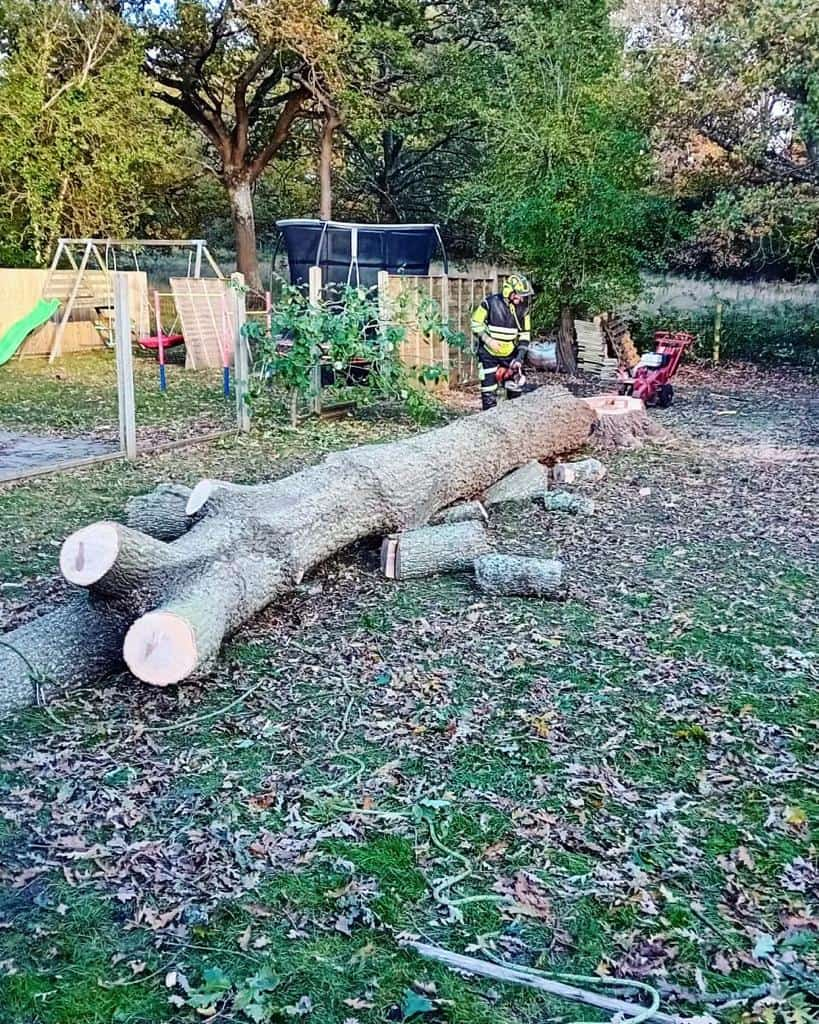
Tree removal requires planning, particularly when the tree is close to buildings, boundaries, garden features or access routes. It may need to be dismantled in controlled sections rather than felled in one piece.
A professional tree surgeon can assess the working area, select suitable equipment and determine how each section should be lowered or removed. This controlled approach helps protect the surrounding property while allowing the work to be completed efficiently.
Conclusion
Removing a tree may be the best way to protect a property when it has severe structural defects, unstable roots, irreversible decline or damage that cannot be managed through pruning. Removal may also be appropriate when a tree has outgrown its position and cannot be retained in a healthy, stable form.
The decision should follow a professional assessment rather than being based on size or appearance alone. If you are concerned about a tree at your property in Gosport, Hampshire, LM Tree Surgery Gosport can assess its condition and explain whether pruning, reduction or removal is the most appropriate option. Contact the team to arrange an inspection.
Call us on: 023 8235 3273
Click here to find out more about LM Tree Surgery Gosport
Click here to complete our contact form and see how we can help with your tree needs.